




 DE
DE  EN
EN  IT
IT Montronix cutting edge detection for maximum tool protection and process reliability
Tools often break right at the start of machining. The possible reason: incorrect tool length. At Montronix, we solve this problem with acoustic cut detection. Our sensors immediately detect the first material contact and protect the tool, workpiece, and machine in real time.
Learn more now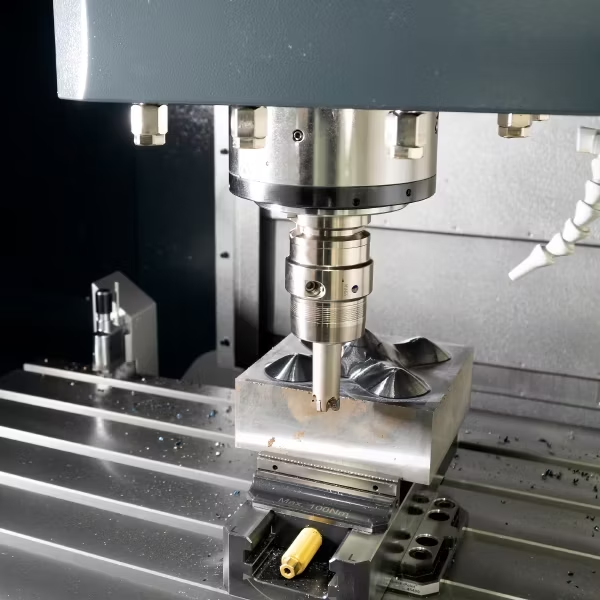
The critical moment at the start of machining
In milling, turning, or drilling, the first contact determines success or damage. If this is missing, the tool runs idle. Breakage threatens, the workpiece remains unmachined, and the machine produces scrap. Our solution prevents exactly that. Right from the very first second.
Options for cut detection
There are different methods available for detecting cut during the machining process, depending on machine type and application. All methods enable detection of material contact in real time and can be used independently of the control system.
This is how acoustic cut detection works
Montronix uses the BV100, a highly sensitive Acoustic Emission Sensor, i.e., a highly sensitive broadband vibration sensor. The structure-borne sound sensor measures material contact in real time and detects the typical high-frequency structure-borne sound generated during cut. As soon as contact occurs, the sensor signal is processed by the TSVA2-DGM amplifier and forwarded to a SPECTRA evaluation unit. The machine stops or sends a warning, depending on the configuration. The cut detection works independently of the control system and is compatible with all CNC machines.
This is how cut detection via hower works
It is not always possible to ideally place a structure-borne sound sensor in every machine. That is why Montronix offers a second option for cut detection with the Power Sensor Set (PS200-NG + 3 Hall sensors). This sensor measures the active power directly at the feed or spindle drive and reacts to the smallest power changes in real time.
As soon as the tool engages the material, the mechanical load on the drive increases. The PS200-NG immediately detects this increase and reports the cut. This solution is particularly suitable for machines with hard-to-reach spindles or for customers who already use power measurement.
cut detection via power can be combined with Spectra ONE or IBU Plus. It works independently of the control system and can also be easily integrated into older machines.
The BV100 is also suitable for monitoring very small tools such as micro drills or thread cutters for breakage or cutting edge chipping, as it reliably detects high-frequency AE signals (50–400 kHz).
Contact us nowStructure-borne sound, acoustics, or power? The right cut detection compared
Technological advantages of Montronix cut detection
Error detection in real time
The system detects a missing cut within a few milliseconds. It immediately stops the machining process before the tool or workpiece is damaged. This way you avoid expensive downtimes and consequential damage right at the start.
Detection based on physical principles
The sensor measures structure-borne sound generated at the first material contact. It does not require any CNC data or programmed setpoints. This makes cut detection reliable for every machining operation.
Integration into any machine environment
You mount the sensor directly on the spindle, tool holder, or workpiece clamping. Connection is via IBU Plus or Spectra ONE, even on existing machines. This way you can upgrade your machine without interfering with the control system.
Automation without additional effort
Calibration runs automatically on first use. You need no additional software and no program adjustment. The system works independently and permanently relieves your operators.
Safety in unmanned operation
Even during unmanned shifts, the system detects idle cuts without delay. It protects tool and workpiece around the clock. This reduces downtime risks even with low personnel availability.
Extension of tool life
Idle cuts put unnecessary stress on the tool and lead to faster wear or breakage. cut detection consistently prevents these situations. This way you use the full tool life and measurably reduce your tool costs.
Increase in process reliability
Detection runs in the background and automatically reports any deviation. It provides safety regardless of the operator's experience. This reduces operating errors and ensures reproducible quality in every shift.
Our services for cut detection
- Selection of the right sensors: We check your machine and select the right sensors for your application together.
- Support during commissioning: We accompany installation on site and test cut detection directly in real operation.
- Provision of a loan system: On request, we provide you with a test system that you can try out on your machine.
- Adjustment of signal processing: We precisely match the signals to your control or evaluation system.
Typical areas of application for cut detection
- In grinding operations, the system detects the initial contact of the grinding wheel with the workpiece and resets the zero point.
- Milling centers benefit from immediate detection of the start of machining.
- In drilling machines, the system prevents scrap if the tool does not contact the workpiece.
- Lathes can be reliably protected, especially with materials prone to breakage.
- Automated manufacturing cells gain safety, as cut detection completely replaces visual inspection.
Contact
Do you want to avoid tool breakage, reduce scrap, and protect your machine? Then test Montronix cut detection at your site. Write to us via the contact form or call us. We will get back to you promptly with a proposal for your application.
Send inquiry nowFAQ: Frequently Asked Questions about cut detection
How does the system detect missing cut?
The sensor measures structure-borne sound directly on the machine. A characteristic signal is generated when material contact occurs. If this is missing, the system immediately detects a deviation. It reacts in real time and protects tool and machine.
Is cut detection compatible with any CNC machine?
Yes, detection works independently of the control system. You simply integrate the system via digital inputs and outputs. Even older machines can be retrofitted without problems. Our technology adapts to your environment.
Can I test the system before buying?
We offer test setups directly on your machine. This way you can check under real conditions whether detection fits your process. You see how early the system reacts and how it integrates into your workflow. You then decide without risk.
What happens if the system detects an idle cut?
The system triggers a signal that you can configure freely. You can stop machining or issue a warning message. This prevents damage to the tool or workpiece. The reaction takes place in less than a millisecond.